
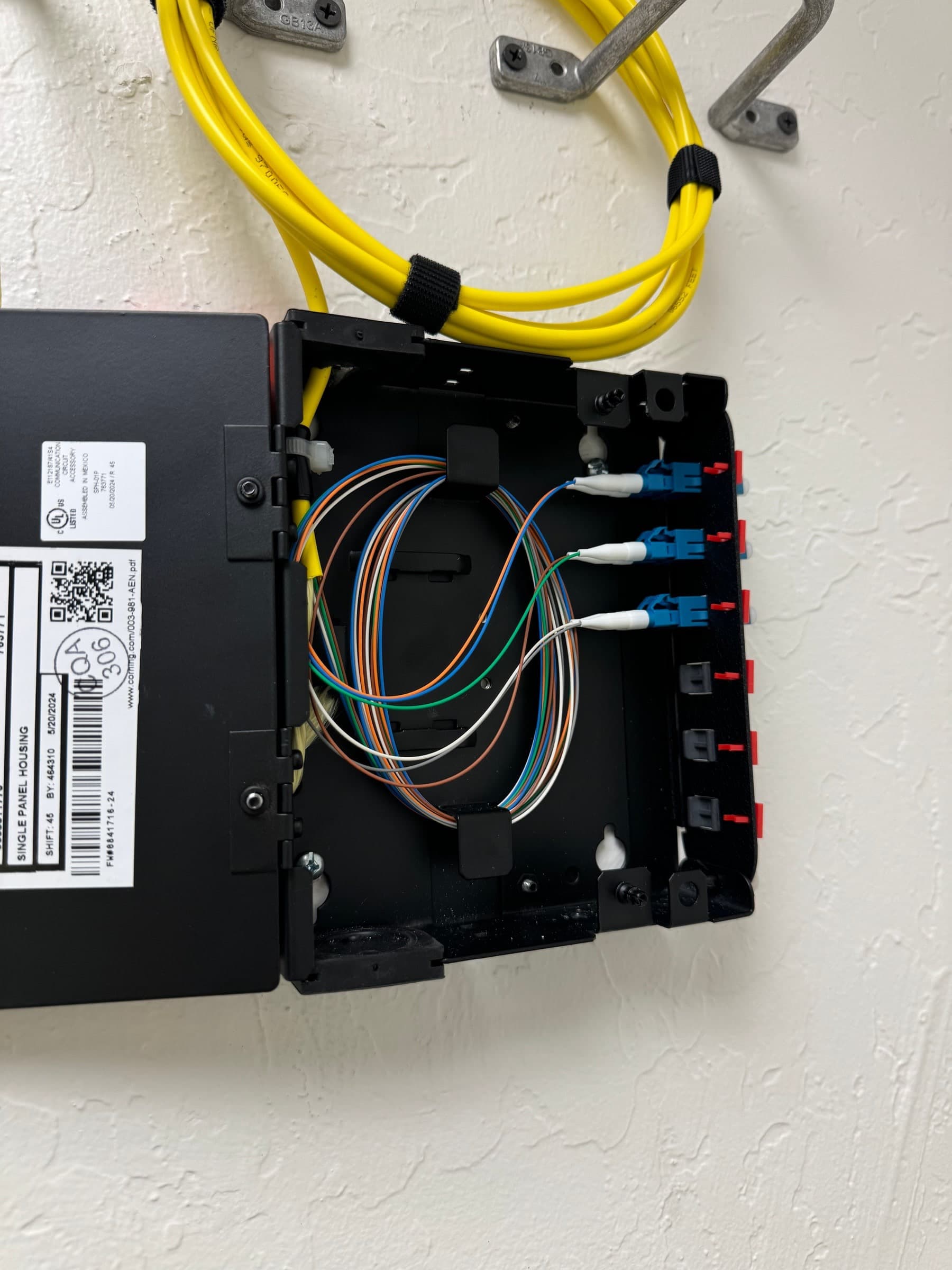
The short answer: use fiber when distance or backbone capacity matters
Fiber optic cabling is often the right fit when a commercial site needs to connect distant parts of a building, detached buildings, yards, network rooms, camera locations, access control areas, or Wi-Fi zones. Copper cabling is still useful for many device drops, but distance and backbone demands can make fiber the better foundation.
For California commercial properties, fiber is especially relevant in warehouses, manufacturing facilities, agricultural processing sites, cold storage, fenced yards, multi-building properties, and owner-occupied campuses. These sites often have long runs, metal structures, equipment-heavy environments, and systems that cannot afford unreliable connectivity.
Long distances beyond practical copper runs
Building-to-building network links
High camera count or high-bandwidth backbone needs
Expansion plans that will add more connected systems
Fiber is not only for internet service
Many buyers think of fiber as something an internet provider brings to the building. That is only one use. Inside a commercial facility, fiber can connect network rooms, remote switches, camera networks, office spaces, production areas, gates, access control equipment, and detached buildings.
This internal fiber is part of the facility’s low-voltage infrastructure. It gives the property a stronger backbone for systems that depend on bandwidth and uptime. When cameras, access control, Wi-Fi, office networks, and operational devices all depend on connectivity, the backbone deserves the same level of planning as the hardware attached to it.
Internal backbones
Remote network equipment
Camera and access control networks
Future-ready commercial infrastructure
Distance is the clearest sign a site may need fiber
Copper cabling has practical distance limits. A facility with long hallways, large production floors, exterior yards, detached offices, gate equipment, or separate buildings may quickly run into those limits. Extending copper in awkward ways can create unreliable performance and difficult service later.
Fiber can solve distance problems cleanly when it is planned with the right pathway, termination, equipment, and protection. The plan should identify where fiber starts, where it lands, what equipment it will connect, how it will be tested, and how future technicians will understand the link.
Detached buildings and remote offices
Gate or yard equipment far from the rack
Large warehouses and manufacturing floors
Separate network rooms or IDF locations
Fiber helps cameras, Wi-Fi, and access control scale
A few cameras or access points may not strain the network. A larger facility can be different. Multiple high-resolution cameras, live video monitoring, remote access, Wi-Fi coverage, controllers, and business network traffic can all create pressure on switches and uplinks.
Fiber gives the facility more room for growth when remote switches or secondary network locations need dependable uplinks. This is important when the buyer expects to add cameras, expand wireless coverage, bring more office users online, or connect new controlled spaces in the future.
Camera network backbones
Wi-Fi access point expansion
Access control controller connectivity
Remote switch uplinks
Single-mode, multimode, and pathway decisions should be made intentionally
Fiber design includes choices around cable type, strand count, connectors, termination points, pathway protection, rack hardware, labeling, and testing. Those choices should be made around the facility’s actual distance, equipment, future expansion, and maintenance expectations.
A buyer does not need to become a fiber engineer, but they should expect the contractor to explain the recommendation in plain language. The scope should make clear what is being installed, where it will be terminated, what it supports, and how it will be documented.
Cable type selected for distance and equipment
Strand count that allows future growth
Protected pathways and serviceable terminations
Labels and test documentation
How to know whether fiber belongs in the first phase
Fiber should be considered early when the facility has long distances, future expansion plans, remote buildings, camera-heavy coverage, Wi-Fi growth, or access control across multiple areas. Waiting until after devices are chosen can force the project into compromises.
The right sequence is site assessment, system goals, pathway plan, backbone decision, device layout, then hardware selection. When the backbone is designed first, the facility can make better decisions about cameras, switches, access points, controllers, and future service.
Assess the site before buying hardware
Design backbone routes before final device placement
Plan rack and network equipment locations
Document links for future service